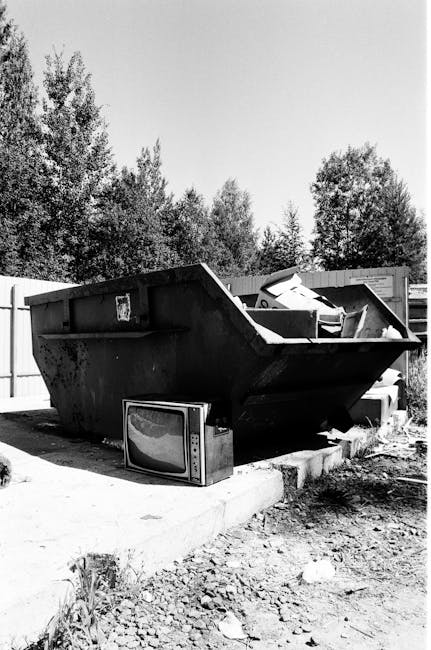
Access problems narrow lanes and bulky waste in Sudbury
Anyone who has tried to move a sofa through a tight hallway, reverse a van into a narrow lane, or shift garden waste from the back of a property knows the same truth: access can be the real challenge, not the waste itself. In Sudbury, where homes, flats, and small businesses can sit behind awkward drives, shared entrances, or narrow roads, bulky waste collections need a bit more thought than usual. That is especially true when access problems, narrow lanes, and bulky waste all collide at once.
This guide breaks down what that means in practical terms, why it matters, and how to plan a smoother, safer clearance. If you are dealing with a garage full of old furniture, a loft with heavy items, or builders' rubble stacked where a vehicle cannot easily reach, you will find clear steps here. And yes, we will keep it plain English.
Why access problems and narrow lanes matter
Access issues affect almost every part of a bulky waste job. The collection may sound simple on paper, but if the van cannot get close enough, if the lane is too narrow for turning, or if there is nowhere safe to carry items from, the job becomes slower and more physical. That can change the time needed, the vehicle needed, and sometimes even the type of clearance method used.
In a place like Sudbury, this matters because local streets and property layouts are not always designed for straightforward loading. You might have terraced housing with limited frontage, shared courtyards, older buildings with tight stairwells, or a lane where parked cars leave only a sliver of movement. Bulky waste adds another layer because it is often awkward, heavy, and not easy to break down. A mattress, wardrobe, or broken desk is rarely handy at the best of times. Add a tight corner and things get interesting, quickly.
The real issue is risk. Poor access can lead to:
- longer collection times
- more manual handling
- damage to walls, floors, gates, or vehicles
- blocked entrances or neighbour complaints
- higher chance of missed items or incomplete loading
There is also a customer-experience side to this. If the collection team arrives and cannot safely reach the waste, the whole process can feel frustrating. A little planning upfront usually saves a lot of back-and-forth later.
Expert summary: The best bulky waste collections in narrow-access locations are not the fastest ones on the day; they are the ones planned properly beforehand. Clear photos, realistic measurements, and honest access details make a bigger difference than most people expect.
How bulky waste removal works in tricky access spots
When access is straightforward, a crew can often park nearby, load items quickly, and leave without much fuss. In narrow lanes or limited-access properties, the process becomes more deliberate. The team has to think about vehicle size, carrying distance, turning space, and whether items can be dismantled first. Sometimes a smaller vehicle is more useful than a large one. Sometimes the answer is extra labour rather than extra machinery. It depends on the site.
Here is the typical flow for a difficult-access collection:
- Initial review - You describe the waste and the access situation as clearly as you can.
- Photo checking - Images help confirm lane width, doorway size, steps, and where items are stored.
- Route planning - The crew decides where to park, how to approach, and whether a smaller van is needed.
- Item preparation - Large items may need dismantling, wrapping, or separating into safer parts.
- Safe removal - Items are carried out with care to avoid knocks, scuffs, or strain.
- Loading and sorting - Waste is loaded with recycling or disposal in mind, where possible.
This is where services such as waste removal can be especially useful, because not every job is a one-item pickup. Some are a mix of furniture, garden debris, and general junk that needs sorting on site. If the property is a flat or maisonette with shared entry points, flat clearance can be a more suitable approach than a standard lift-and-load job.
For larger clearances, it can also help to think in sections. A garage clearance, for example, may involve moving out shelves, tyres, paint tins, broken tools, and old bikes from a space that barely allows two people to pass each other. That is not unusual. It just means the job needs a calmer rhythm and a more careful plan.
Key benefits and practical advantages
Planning for access problems is not just about avoiding hassle. Done well, it creates genuine benefits for the property owner and the clearance team.
| Benefit | What it means in practice | Why it matters |
|---|---|---|
| Safer handling | Items are moved with fewer rushed lifts and awkward twists | Reduces strain and the chance of damage |
| Better time control | The job is scoped more accurately before arrival | Helps avoid delays and surprises |
| Less property damage | Teams can protect walls, bannisters, gates, and floors | Important in older homes and tight hallways |
| Smarter vehicle choice | Small vans or split loads can be used where needed | Helpful on lanes with limited turning space |
| Fewer failed visits | Access is checked before anyone sets off | Saves time and frustration for everyone |
There is another advantage that tends to get overlooked: peace of mind. When the access plan is clear, the whole job feels less chaotic. You are not standing there wondering if the van will fit, or whether the team will need to give up halfway through. That matters more than people admit.
For customers comparing services, it is also worth looking at how clearly the company explains its approach to safe handling, insurance, and sorting. The pages on insurance and safety and health and safety policy are useful indicators of how seriously a provider treats practical risk, not just price.
Who this is for and when it makes sense
This type of planning is useful for a lot more people than you might think. If your situation sounds even slightly awkward, you are probably in the right place.
- Homeowners clearing bulky household items from a narrow driveway or side return
- Flat residents dealing with stair access, shared corridors, or limited parking
- Landlords and letting agents arranging clearances between tenancies
- Small businesses needing office furniture or stock removed from tight premises
- Builders and trades with rubble, timber, and packaging stored in cramped access areas
- Families handling bereavement or downsizing where there is more furniture than space to move it
It makes sense whenever the waste is bulky enough to create a pinch point. A sofa is one thing. A sofa plus a staircase landing, a parked car outside, and a narrow lane behind the property? That is a completely different job. Truth be told, it only takes one awkward obstacle to change the whole plan.
If the property contains mixed items, services like house clearance, home clearance, or furniture clearance may fit better than trying to tackle everything as a single bulky item pickup. For older sheds, storage areas, and overflow spaces, garage clearance and loft clearance are often the most practical next steps.
Step-by-step guidance
If you want the cleanest possible result in a narrow-lane or difficult-access job, follow a simple process. It does not need to be complicated.
- List the items clearly
Write down what needs removing. Include anything heavy, fragile, sharp, awkward, or damp. A quick list helps estimate the loading effort. - Measure the access points
Check gate width, corridor width, stair turns, and any tight corners. Even a rough measurement is better than guessing. - Take a few honest photos
Show the waste, the route out, and the outside access. One wide shot and one close-up usually help a lot. - Flag obstacles early
Low branches, parked cars, steep steps, soft ground, locked gates, or shared entrances all matter. - Choose the right service type
Furniture disposal is not the same as builders waste clearance. And a business tidy-up will often need a different setup from a domestic clear-out. - Confirm timing and parking
On tighter streets, a five-minute parking plan can save half an hour of awkward shuffling. Sometimes more, actually. - Prepare the space before arrival
Move smaller items, unlock gates, and make the route as open as possible. That little bit of prep really helps.
For jobs involving construction debris or refurbishment leftovers, builders waste clearance is usually the better match. For workplace removals, office clearance can be a cleaner fit, especially if desks, filing units, and monitors need taking out from a tight entrance or upper floor.
A small but helpful tip: if you are unsure whether access is actually difficult, stand where the vehicle would likely stop and walk the route out while holding something bulky, even if it is just a laundry basket. You will notice the pinch points straight away.
Expert tips for better results
From experience, the smoothest access-limited clearances usually share a few habits. None of them are glamorous. All of them help.
- Keep the path as straight as possible. The fewer turns, the better. That sounds obvious, but people often leave chairs, bins, or plant pots in the way.
- Break down oversized items early. Bed frames, wardrobes, and shelving often become much easier once dismantled.
- Use the right team size. More hands can make sense for heavier items, but too many people in a narrow space can become counterproductive.
- Protect surfaces. Cardboard, blankets, and simple edge protection can stop avoidable scuffs on stairs and door frames.
- Think about weight distribution. Not everything should be loaded last. Heavier items need a sensible place in the vehicle.
- Be honest about what is outside. Wet garden waste, soil, broken slabs, and timber behave differently from dry household junk.
For mixed waste situations, a service provider may recommend combining methods. For example, a heavy sofa, some loose furniture, and a pile of general clutter may be handled more efficiently than if each part were treated separately. That is where understanding the difference between furniture disposal and broader waste removal really helps.
And yes, sometimes the best tip is the least exciting one: measure twice, guess less. There is a reason old hands say things like that.
Common mistakes to avoid
Most access problems are manageable. The trouble usually starts when people underestimate them.
- Assuming a van can fit because a car can - a collection vehicle may need a wider turning circle than your daily driver.
- Not mentioning steps or slopes - these change the labour involved and can affect loading plans.
- Leaving items inside packed rooms - if the crew has to move smaller clutter first, the job takes longer.
- Mixing hazardous items with normal waste - this creates safety and disposal issues.
- Forgetting shared access - neighbours, landlords, or management companies may need notice.
- Waiting until the last minute - narrow-lane jobs often need more coordination than open-access pickups.
One other mistake is trying to force a standard approach onto a non-standard property. A basement flat in a terrace, for example, is not the same as a detached house with a drive. Obvious enough, but it gets missed all the time.
If the waste includes items stored in a cramped outbuilding or old lock-up, a garage clearance or garden clearance might be a better route than a one-size-fits-all removal. Matching the service to the space is half the battle.
Tools, resources and recommendations
You do not need specialist kit to prepare for a tricky access collection, but a few simple tools make life easier.
- Measuring tape - for gates, doorways, and stair turns
- Phone camera - for showing access points and item size
- Basic screwdriver or hex key - useful if furniture can be dismantled safely
- Gloves - especially for rough timber, old metal, or dirty waste
- Protective covers - blankets, cardboard, or floor protection for delicate interiors
- Notebook or phone notes - to keep track of measurements and instructions
For customers who want to compare service quality, the most useful resources are often the provider's own information pages. The sections on pricing and quotes, recycling and sustainability, and about us can help you judge how transparent and organised a company is before you book.
If your concern is more about respectful handling and clear communication, especially in a sensitive house clearance, it is fair to look for providers that explain their process properly rather than just promising to be "quick and cheap". Quick is nice. Clear is better.
Law, compliance, standards, and best practice
This kind of work sits within normal UK waste-handling expectations, so it should be taken seriously. You do not need a legal lecture, but a few basics matter.
Anyone removing waste professionally should follow sensible duty-of-care practices, use safe loading methods, and handle different waste types appropriately. That includes keeping clear records where relevant, avoiding illegal dumping, and sorting materials in a way that supports responsible disposal or recycling. In practical terms, customers should expect the provider to know how to manage waste safely and lawfully, not just how to lift things into a van.
Best practice also includes:
- checking access before arrival where possible
- using a suitable vehicle for the location
- training staff in manual handling and safe movement
- protecting property during removal
- being clear about exclusions and limitations
If you are arranging a job through a business or landlord, documentation can matter too. Terms, payment, and expectations should be understood upfront. A clear terms and conditions page is a good sign that the provider has thought beyond the collection day itself.
One thing worth saying plainly: if a route looks unsafe, it should not be forced. Narrow lanes, poor visibility, low branches, or unstable ground can all justify a different approach. That is not a complication; it is common sense.
Options, methods, and comparison table
Different access problems call for different solutions. Here is a practical comparison.
| Method | Best for | Pros | Limitations |
|---|---|---|---|
| Standard van collection | Reasonable driveway or roadside access | Simple and efficient | Not ideal for very tight lanes |
| Smaller vehicle / split load | Narrow streets, limited turning space | More flexible positioning | May take more trips |
| Item dismantling before removal | Large wardrobes, beds, shelving | Reduces awkward handling | Needs extra time and tools |
| Room-by-room clearance | Homes, flats, and mixed contents | Better organisation | Can take longer on the day |
| Dedicated specialist clearance | Builders waste, office items, or full property clearances | Better matched to the waste type | Requires clearer upfront planning |
If you are unsure which route makes most sense, think about the item size first, then the route out, then the outside access. Not the other way around. That sequence saves a lot of hassle.
Case study or real-world example
A typical scenario might be an older property off a narrow lane in Sudbury. The homeowner has a broken wardrobe, two mattresses, a couple of heavy drawers, and several bags of old bits from the loft. The lane is tight, there is a parked car opposite, and the front path includes a short step down and a left-hand turn through a slim hallway.
On paper, it sounds straightforward. In reality, it needs a plan.
First, the items are grouped by size and moved closer to the exit. Next, the wardrobe is taken apart because carrying it whole would be clumsy and risky. The team uses a smaller vehicle setup because turning room is limited. Surfaces near the hallway are protected, and the heaviest items are loaded in a sequence that keeps the carry distances short. The whole job is quicker because the awkward bits were handled early, not ignored.
Another example: a small office clearing old desks and filing cabinets from a first-floor space above a shop. The access is a narrow internal staircase, and there is no generous loading bay outside. In that case, the work needs patience, care, and a sensible order of removal. The result is not flashy, but it works. And that is really the point.
Practical checklist
Use this before booking or on the morning of collection.
- Have you listed every bulky item that needs removing?
- Have you measured gates, corridors, stairs, and door widths?
- Have you mentioned narrow lanes, parked cars, or limited parking?
- Have you flagged steps, slopes, or uneven ground?
- Have you taken photos of the waste and access route?
- Have you checked whether items can be dismantled?
- Have you separated any hazardous or restricted items?
- Have you told neighbours or a managing agent if shared access is involved?
- Have you confirmed your preferred timing and any restrictions?
- Have you checked whether the job is best handled as furniture clearance, house clearance, office clearance, or general waste removal?
That is usually enough to avoid the awkward last-minute scramble. A bit of prep goes a long way, really.
Get a free quote today and see how much you can save.
Conclusion
Access problems, narrow lanes, and bulky waste in Sudbury do not have to turn a simple clearance into a headache. The key is to plan with the space in mind, not just the waste. Once you understand the route, the item size, and the safest way to load, everything becomes more manageable.
Whether you are clearing a house, a flat, a garage, or a worksite, the best results usually come from good communication and a realistic approach. That means honest photos, clear measurements, the right service type, and a team that knows how to work carefully in tight conditions. Nothing fancy. Just solid, thoughtful planning.
If there is one thing to take away, it is this: difficult access is not a deal-breaker. It is simply part of the job, and with the right preparation, it can be handled smoothly and safely. That small bit of certainty can make a stressful day feel much lighter.
Frequently Asked Questions
What counts as an access problem for bulky waste removal?
An access problem is anything that makes it harder to reach, carry, or load items safely. Common examples include narrow lanes, tight staircases, steep steps, shared entrances, low branches, and limited parking.
Can bulky waste still be collected if the van cannot park right outside?
Often, yes. A collection can still work if there is a safe carry route from the vehicle to the property. The longer or more awkward that route is, the more planning the job needs.
Should I dismantle furniture before the collection team arrives?
If it can be done safely, dismantling large furniture is usually helpful. It can make moving items through narrow spaces much easier and reduce the chance of damage. Not everything needs to come apart, though.
Is narrow-lane waste removal more expensive?
It can be, depending on how much extra time, labour, or vehicle adjustment is required. That said, the actual cost depends on the full job, not just the lane width. The clearest route to an accurate price is to provide photos and measurements early.
What should I photograph before booking a clearance?
Take pictures of the items, the doorway, the route out, any stairs or steps, and the outside access point where a vehicle would likely stop. A few honest photos usually say more than a long message ever could.
Can a flat clearance be done in a building with awkward stairs?
Yes, many can. The team just needs to know about the stair layout, landing size, and any shared access restrictions. A flat clearance approach is often more suitable than a general pickup.
What if my bulky waste is mixed with garden debris or builders' rubble?
That is common. Mixed loads can often be handled, but it helps to separate the materials where possible. If the load includes construction debris, builders waste clearance may be the better fit.
How do I know whether I need house clearance or furniture clearance?
If you are removing a wide mix of contents from multiple rooms, house clearance is usually more appropriate. If the job is mainly sofas, tables, wardrobes, or similar pieces, furniture clearance may be enough.
What happens if access turns out to be worse than expected?
The team may need to adjust the plan, use a different loading method, or in some cases reschedule if the route is unsafe. This is why detailed access information upfront is so valuable.
Do I need to do anything about parking or permits?
If parking is tight or restrictions apply, it is worth checking ahead. Some jobs are delayed simply because a loading space was not thought through. A little attention here saves a lot of faff on the day.
Is there a difference between waste removal and furniture disposal?
Yes. Furniture disposal is narrower and focuses on items such as sofas, beds, and cabinets. Waste removal is broader and can include mixed household, garden, or commercial waste depending on the job.
How can I make a difficult-access collection go more smoothly?
Measure the route, send photos, clear the path, mention any obstacles, and choose the right service type. That combination usually makes the biggest difference, and it keeps the whole thing much calmer.